📐 Antenna Calculator & Builder
Calculate antenna lengths, build wire antennas, and design your perfect antenna system. From simple dipoles to complex arrays - all the calculations you need!
🧮 Antenna Calculators
📏 Dipole Antenna Calculator
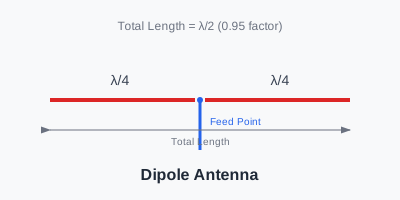
📋 Dipole Construction Tips:
- • Use 14 AWG or thicker wire for strength
- • Center feed with 50Ω coax
- • Keep 1/2 wavelength above ground
- • Use good insulators at the ends
📶 Vertical Antenna Calculator
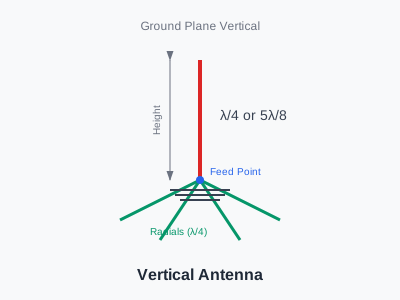
📋 Vertical Construction Tips:
- • Use 4+ radials for good ground plane
- • Feed at base with 50Ω coax
- • Ground radials = 1/4 wavelength
- • Consider loading coil for shorter
🎯 End-Fed Half Wave (EFHW) Calculator
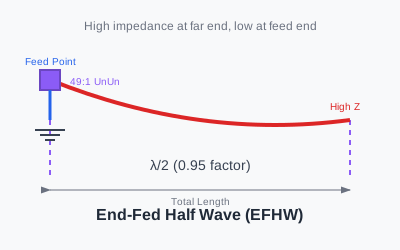
⭐ EFHW Advantages for VU3:
- • Single wire - easy to hide/deploy
- • Works multiple bands with tuner
- • High impedance feed point - flexible routing
- • Perfect for apartment/restricted locations
- • Estimated cost: ₹3,000-5,000 for 49:1 transformer
📡 Yagi Beam Calculator
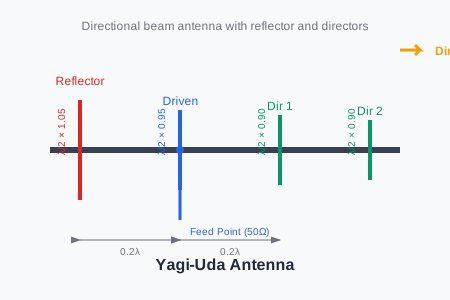
🏗️ Popular Antenna Designs
📏 Wire Antennas
Dipole
Classic center-fed design
EFHW
End-fed convenience
Inverted V
Space-saving dipole variant
📶 VHF/UHF Antennas
1/4 Wave Vertical
Simple omnidirectional
J-Pole
No ground plane needed
3-Element Yagi
Directional gain
🚀 Advanced Antennas
Hex Beam
Multi-band directional
Log Periodic
Wideband coverage
Phased Array
Steerable pattern
📻 Band-Specific Antenna Recommendations
📡 HF Bands (VU3 Limited)
40m (7 MHz)
EFHW: ~20m wire, Dipole: ~20m total
20m (14 MHz)
EFHW: ~10m wire, Dipole: ~10m total
15m (21 MHz)
EFHW: ~7m wire, Vertical: ~3.5m
📶 VHF (2m)
1/4 Wave Vertical
~50cm + 4 radials
J-Pole
~1.5m total length
3-El Yagi
~1.2m boom, 7-9 dBi gain
📡 UHF (70cm)
1/4 Wave Vertical
~17cm + radials
5-El Yagi
~50cm boom, 10+ dBi gain
Collinear
~1m vertical, 6-8 dBi gain
🔨 Antenna Construction Tips
⚡ Wire & Materials
- • Use 14 AWG minimum for HF antennas
- • Stranded wire is more flexible than solid
- • Stainless steel for corrosion resistance
- • Good insulators prevent RF leakage
- • Weatherproof all connections
📐 Installation Guidelines
- • Height matters more than power
- • Keep away from metal objects
- • Use proper coax impedance (50Ω)
- • Minimize coax run length
- • Install lightning protection
📚 Antenna Reference Gallery
Dipole Antenna
Most popular HF antenna
- • Total length = λ/2
- • Feed impedance: ~73Ω
- • Bidirectional pattern
- • Easy to build & tune
Vertical Antenna
Omnidirectional VHF/UHF
- • Length = λ/4 or 5λ/8
- • Needs ground plane
- • 360° coverage
- • Good for mobile/base
End-Fed Half Wave
Portable HF solution
- • Length = λ/2
- • Needs 49:1 UnUn
- • Single feed point
- • Great for field ops
Yagi-Uda Beam
Directional high gain
- • Multiple elements
- • High gain & directivity
- • VHF/UHF/Microwave
- • Excellent for EME/DX
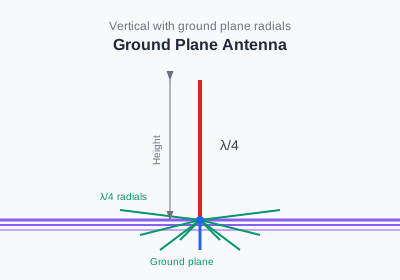
Ground Plane
Classic base antenna
- • λ/4 vertical + radials
- • Low angle radiation
- • Excellent for DX
- • 50Ω feed impedance
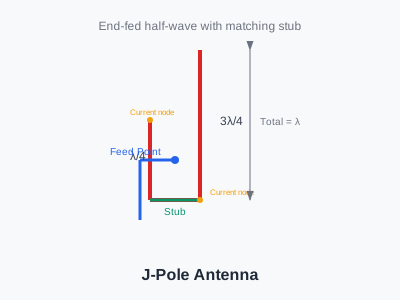
J-Pole Antenna
End-fed with stub
- • Total length = λ
- • Built-in matching stub
- • No ground plane needed
- • Popular for VHF/UHF
📋 Quick Reference Notes
Wavelength Formula:
λ (meters) = 300 / frequency (MHz)
λ (feet) = 984 / frequency (MHz)
Common Corrections:
• Wire antennas: multiply by 0.95
• End effects: subtract 5%
• Velocity factor varies by material